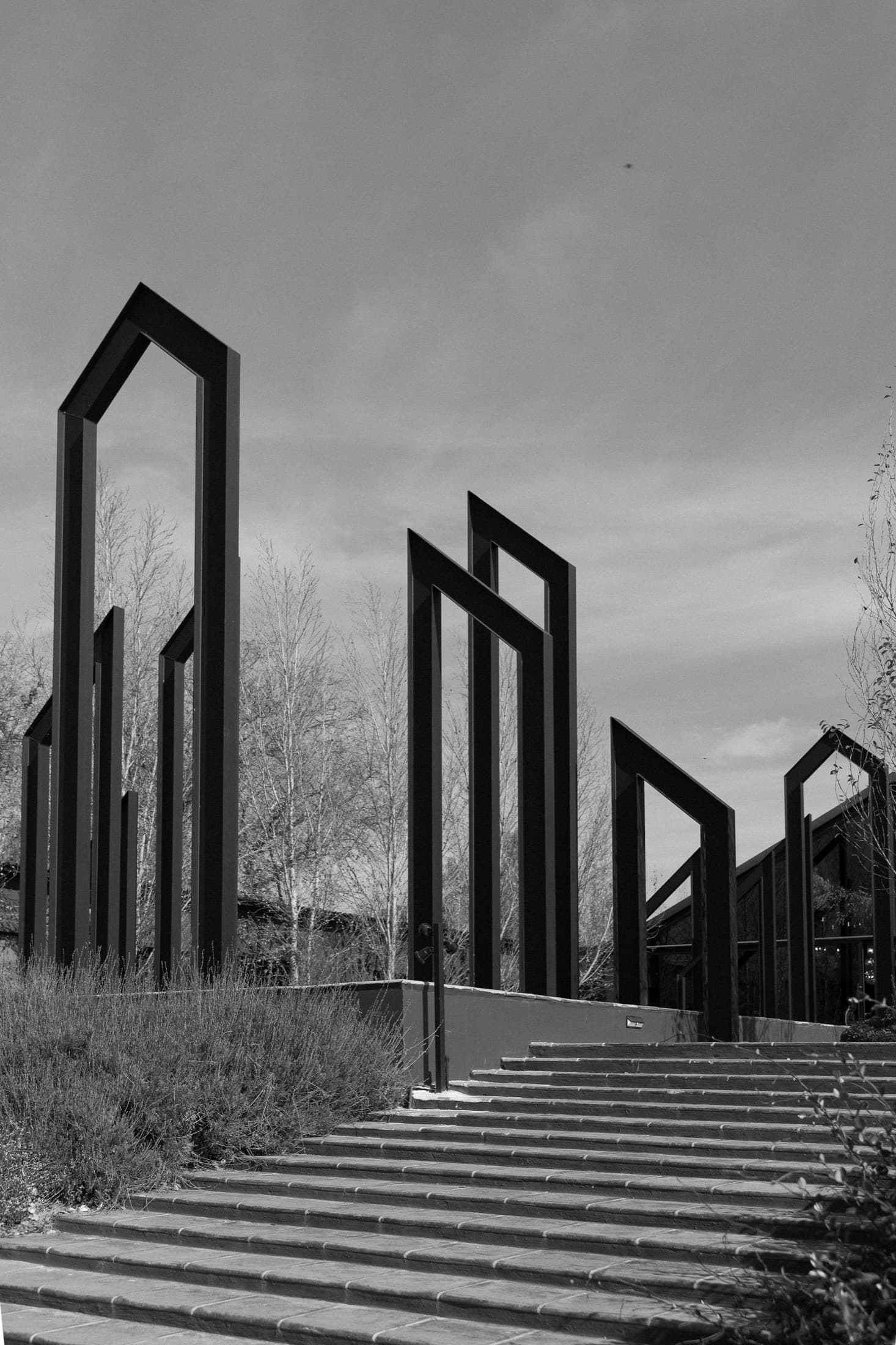
March has arrived on the Highveld, and with it the first cool mornings of autumn. The light in the chapel has started doing the thing it does at this time of year: coming in low through the trees, laying long bars of gold across the aisle, catching the river beyond the glass. Couples who visit in these weeks tend to go quiet when they walk in. We have watched it happen hundreds of times, and it never stops being moving.
It seems a good moment, then, to write about the question we are asked more than almost any other. Why glass? Why have couples, in South Africa and around the world, turned so decisively toward chapels made of light?
For most of wedding history, the ceremony space was designed to shut the world out. Thick stone walls, small high windows, candlelight in the gloom. There were good reasons for it once, and there is still a real beauty in that tradition. But something shifted in the last decade. Couples began asking for the opposite: not a room that excludes the landscape, but one that hands the ceremony over to it.
A glass chapel is, in the most literal sense, a frame. Ours stands in the forest beside the river at Muldersdrift, in the green folds of the Cradle of Humankind, and the walls do almost nothing except hold the roof up and keep the weather off. Everything else is trees, water, sky. When you exchange vows inside it, you are visibly inside the world rather than sealed away from it, and guests describe the effect in strikingly similar language: it feels like being married outdoors without any of the risk of being married outdoors.
That last point deserves more attention than it usually gets, because it is the quietly practical heart of the whole idea.
The weather problem, solved rather than gambled
Every couple who dreams of an outdoor ceremony is making a bet. On the Highveld in summer, the bet is against the afternoon thunderstorm, which is less a possibility than a scheduled event: the clouds stack up after lunch, the storm breaks theatrically, and by early evening the sky is rinsed clean and golden. In winter the days are dry and sunny but the temperature falls fast once the light goes. Either way, the open-air ceremony asks you to gamble your most unrepeatable hour on the sky's mood.
Glass dissolves the gamble. A summer storm against the chapel windows is not a disaster; it is scenography, thunder rolling over the vows while everyone stays dry. A winter ceremony at 15:00 happens in warm, bright sunshine pouring through the panes, no marquee flapping, no plan B in an ugly hall. You keep the forest and lose the anxiety. For photographers, the space is a gift in every season: no mixed artificial light to fight, just daylight, softened and directed by the trees.
What light does to a ceremony
There is a subtler reason couples choose glass, and it has to do with attention.
A dim, enclosed room concentrates focus inward, which suits solemnity. A glass chapel does something different. It holds the couple at the centre while letting the eye rest, now and then, on moving water and shifting leaves. Guests report feeling calm in a way they struggle to explain. We suspect the explanation is simple: human beings settle in the presence of trees and light, and a ceremony held inside that settling takes on the same quality. Vows land differently in a room that breathes.
It also means the chapel is never the same twice. A morning ceremony in October sits in sharp spring light with the forest electric green. An April afternoon wraps the same aisle in amber. A June wedding, held earlier in the day while the winter sun is high, feels like being inside a lantern. Couples planning now for the coming winter and spring are effectively choosing their light the way they choose their palette, and it is worth spending time in the gallery looking at ceremonies across the seasons before you decide when yours should be.
Designing for a transparent room
A word of practical advice, learned from many hundreds of ceremonies: decorate a glass chapel with restraint. The room already has walls of forest; it does not need them repeated in flowers. The most beautiful ceremonies we host tend to use a concentrated moment of florals at the entrance or along the aisle, and then let the architecture and the trees do the rest. Couples working through the Design Your Day studio often begin with elaborate schemes and gradually strip them back once they have stood in the space, and the stripping back is almost always the right instinct.
Think, too, about the walk. The approach through the forest is part of the ceremony at Inimitable, the aisle beginning long before the doors. And think about the exit: the river is right there, and the ten minutes after the ceremony, with guests spilling out under the trees, is some of the best photography of the entire day.
A chapel is a beginning, not the whole day
One last honest note. The ceremony is perhaps forty minutes of a celebration that will run for many hours, so a glass chapel makes most sense as part of an estate that can carry everything that follows: in our case a reception hall for 100 to 400 guests, twelve executive suites, a bridal suite with private gardens, a honeymoon villa and a groom's suite in the forest, all a few minutes' walk from the chapel doors. The magic of glass is real, but it is the continuity, forest to chapel to reception to bed, that makes the day feel whole. You can see how the pieces fit together across our collections.
Zavion and John, our founders, chose glass for the chapel before almost any other decision about the estate was made, on the theory that no designed interior could compete with the forest it stands in. The quiet gasps at the doorway suggest they were right.
If you would like to feel it rather than read about it, the chapel is at its autumn best right now, and you can book a viewing any weekday or Saturday morning.