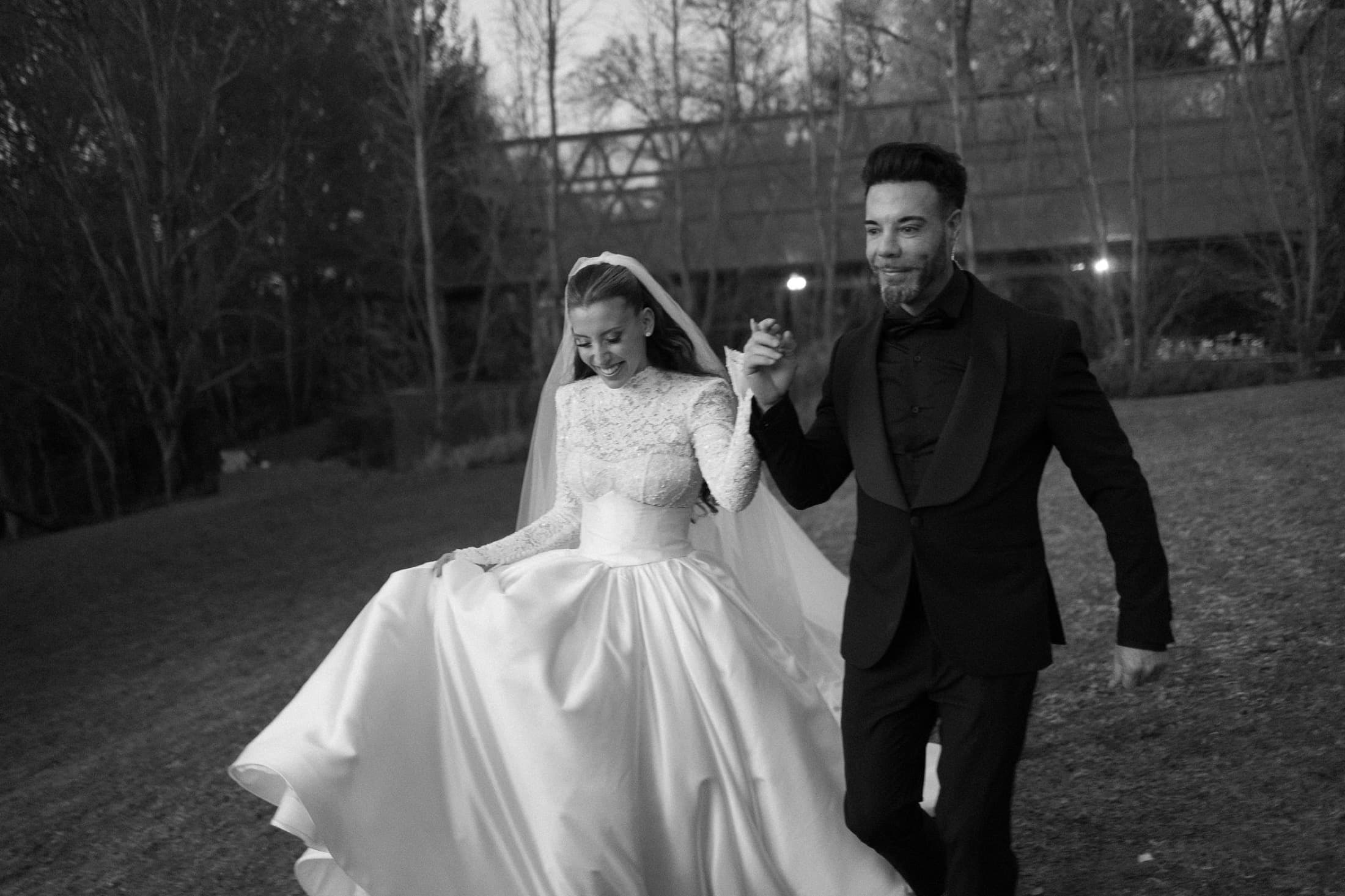
It is June as we write this, and the estate is in its winter state. The morning frost burns off the lawns by nine. The sky holds the same enamelled blue for days on end. The forest around the chapel has thinned to structure, all branch and light, and the river runs clear and low. And on clear winter nights the sky above the veld grows so dense with stars that photographers have been known to abandon the dance floor and point their lenses upward instead.
We are aware that this is not most people's mental image of a wedding month. In the northern hemisphere, winter weddings mean gambling against snow and grey. Even here, couples raised on the idea of a spring or summer wedding often skip past June, July and August without a second look. This piece is written from inside those months, to make the case that the skipping is a mistake.
Start with the meteorological facts, because on the Highveld they are almost unfair. Winter in Gauteng is the dry season. Not drizzle-occasionally dry: statistically, dependably rainless. From June to August the days are sunny and mild, the air is clear in a way summer's haze never allows, and the one thing that can genuinely disrupt an outdoor moment, rain, has essentially left the province. Summer couples plan around the afternoon thunderstorm; winter couples do not plan around weather at all. If certainty is a luxury, a Highveld winter is the most luxurious sky in the wedding calendar.
The trade is the cold, and it is a specific, manageable kind of cold. Winter days here commonly sit in the high teens and low twenties in the afternoon sun, warm enough for a lawn full of guests in daylight. The drop comes fast at sunset, and by mid-evening it is genuinely cold. The entire craft of the winter wedding is arranging your day around that curve, and the arrangement is simple: hold everything outdoors early, and make the indoors magnificent.
In practice that means a ceremony at 14:00 or 14:30, when the sun is high and the glass chapel is at its winter best. Glass matters enormously in this season. The chapel sits in the forest beside the river, and in June the low sun comes through the bare canopy and fills the whole space with warmth, real, physical warmth, the greenhouse kind, so that guests sit in golden light in their coats and slowly take the coats off. An open-air ceremony in winter is an endurance event; a glass one is a sunroom in a forest.
Portraits follow immediately, because winter's golden hour arrives early, around 16:30, and it is the finest light of the year. Ask any photographer who works in Gauteng: the dry air strips the atmosphere of its summer softness, and the late-afternoon light in June and July has an amber clarity that makes skin, fabric and grassland glow. The winter veld itself becomes the backdrop, pale gold, graphic, endless. Couples travel across the world for light like this. Here it is simply what four o'clock looks like.
Then, as the sun goes, the wedding turns inward, and this is where winter stops being a constraint and becomes an aesthetic. Candlelight means more in winter. So do fires, and deep red wine, and food with actual gravity to it. Executive Chef Andrew Draper's winter menus are, in our kitchen's own opinion, the best cooking of the year: slow braises, roasted and earthy things, courses that summer's heat would never permit. The reception hall, holding anything from 100 to 400 guests, closes warmly around the party, and the contrast, cold clear night outside, firelight and dancing inside, produces an intimacy that a hot December evening with the doors flung open simply cannot. If you want to see how couples have styled this, the gallery holds a full range of winter celebrations alongside the summer ones, and the difference in mood is instructive.
There is also the unsentimental case, and we will make it plainly. Winter is the quiet season, and quiet seasons are kind to couples. Saturdays in June, July and August are available on far shorter horizons than the spring dates that vanish two years out. Suppliers, from florists to musicians, are less contested and more attentive. And a wedding budget stretches further in the quiet months; when you compare options in our collections, the winter dates are consistently the strongest value in the calendar. For couples marrying from abroad, the alignment is even better: a Highveld July lands inside the European and North American summer holidays, guests fly into dry, sunny weather, and the estate's position, twenty minutes from Sandton and fourteen kilometres from Lanseria International Airport, keeps cold-evening travel to a few warm minutes.
A word about where all this happens, because winter suits the landscape itself. The Cradle of Humankind, the World Heritage region around Muldersdrift, is at its most legible in the dry season: the grasslands open up, the hills show their bones, game drives and cave visits run in perfect clear weather, and guests who stay the weekend get South Africa at its most quietly spectacular. Winter is also the argument for keeping everyone on the estate. The twelve executive suites, the bridal suite with its private gardens, the honeymoon villa and the groom's suite in the forest mean that when the night finally turns properly cold, the distance between the dance floor and a warm bed is a short walk under the stars. Winter is the estate's secret season, and the couples who marry in it tend to become its most devoted evangelists.
Some practical counsel for anyone persuaded. Move every outdoor element before 17:00 and be ruthless about it. Brief your guests honestly about the evening cold so they dress for it, and provide blankets or wraps anyway; a basket of them at the door reads as hospitality, not apology. Give the bar mulled and warm options alongside the champagne. Feed people slightly earlier than you would in summer. And build the day in the Design Your Day studio with the winter timeline from the start, rather than adapting a summer plan and shivering through the gaps.
The quiet season will not stay quiet forever; every year a few more couples work out what June light does in a glass chapel. If you would like to find out while it is still winter's secret, book a viewing on a clear weekday afternoon, and see the four o'clock light for yourself.